The best employee onboarding automation software 2026

Every team has the same onboarding dream: get new hires productive, fast.
But even with the checklists, training sessions, and documentation you’ve painstakingly put together, chances are the onboarding experience is rarely ever consistent across roles or teams.
Not to mention that once new hires start working in your actual tools and processes, those resources aren’t much help because they are so hard to find. Information is scattered or outdated, learning still depends on live walkthroughs or one-off questions, and before you know it, months have gone by and your new teammates are still trying to catch up.
The onboarding dream can’t happen with a checklist or a knowledge base alone. That’s why more teams are building employee onboarding tool stacks, combining HR systems, training platforms, task management tools, and workflow documentation solutions that work together, so new hires can get to work sooner.
What are onboarding tools?
Onboarding tools help companies bring new hires up to speed faster and more consistently. They typically help with:
- Setting up employees (HR, payroll, IT access)
- Delivering training and documentation
- Tracking onboarding progress
- Teaching employees how to actually do their jobs
But no single tool does all of this well. That’s why it’s crucial to build a robust stack of onboarding tools that cover the bases.
Types of employee onboarding tools
1. Workflow documentation and software adoption
This is the missing layer in most onboarding stacks. It’s not enough to tell someone how a process works. They need to see (and follow!) it inside the tools they use every day.
These tools help you:
- Capture workflows automatically
- Turn processes into step-by-step guides
- Show employees exactly what to do, in the moment
2. HR and hiring tools
These platforms handle the operational side of onboarding:
- Employee records
- Payroll and benefits
- Offer letters and compliance
- IT provisioning
They make sure everything is set up correctly from day one.
3. Knowledge bases and training tools
These tools centralize documentation and training content so new hires can learn independently.
They’re great for:
- SOPs and training manuals
- Company policies
- Structured learning paths
4. Onboarding coordination and analytics
These tools help teams coordinate onboarding across departments, ensure nothing falls through the cracks, and measure how new hires are progressing.
They track:
- Tasks and deadlines
- Progress across teams
- Onboarding milestones
- New hire productivity
The 11 Best Employee Onboarding Tools in 2026
1. Tango
Best for documenting onboarding workflows
G2 Rating: 4.7/5 (514 reviews)
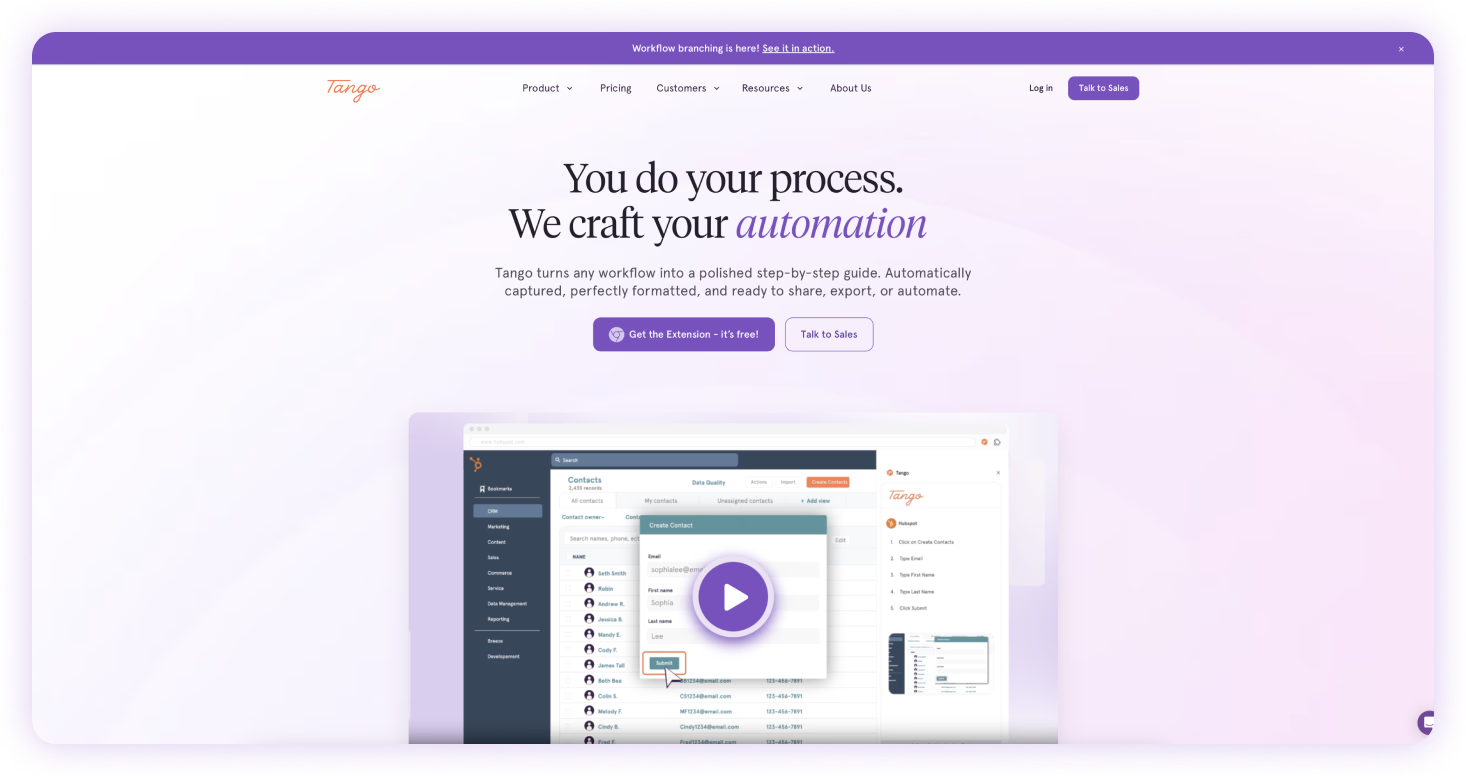
Most onboarding tools stop at training. Tango picks up where they leave off—helping employees actually do the work.
Instead of relying on static documentation that quickly becomes outdated, Tango automatically captures workflows and turns them into step-by-step guides that anyone can follow, right inside the tools they need to learn.
Create process documentation in seconds
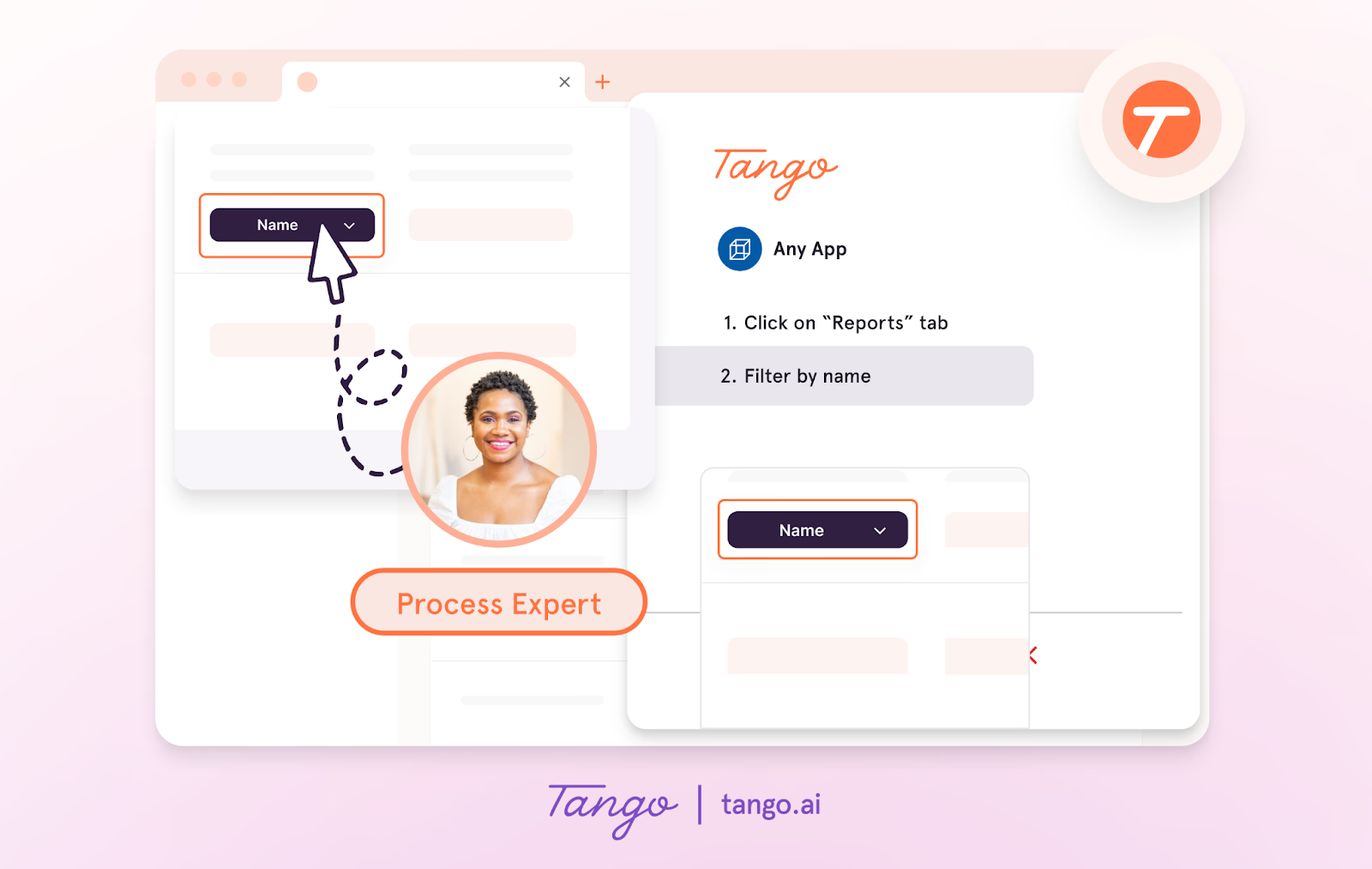
Tango makes capturing processes effortless, so you can document as you work.
- Capture guides and walkthroughs anywhere across the web with the browser extension, or use the desktop app for offline applications.
- Click through your process and instantly generate a step-by-step guide with screenshots, annotations, descriptions, and links.
- Update descriptions, insert additional context, and add flair to your screenshots with advanced editing tools.
Enable perfect process adoption with in-app walkthroughs
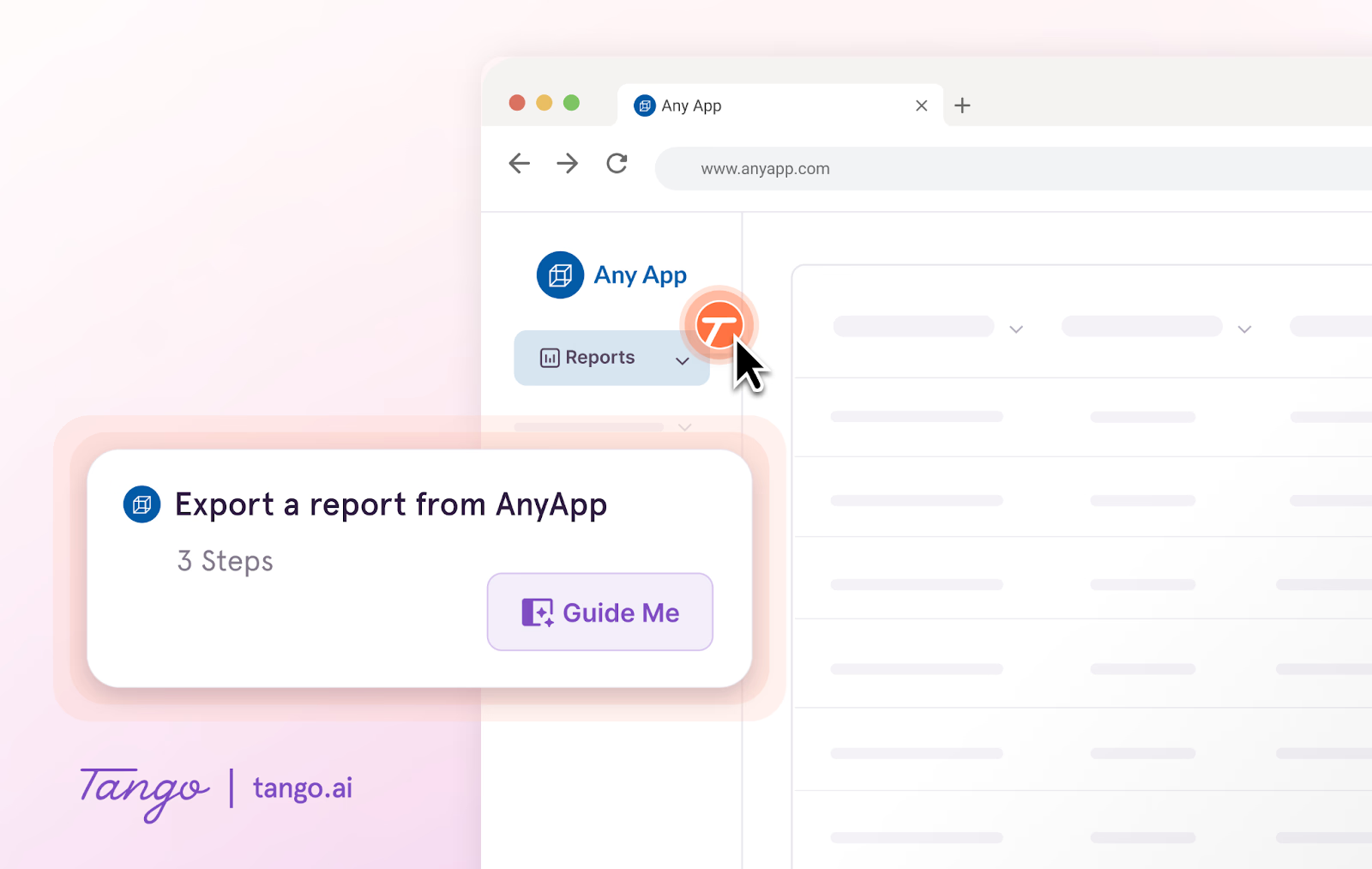
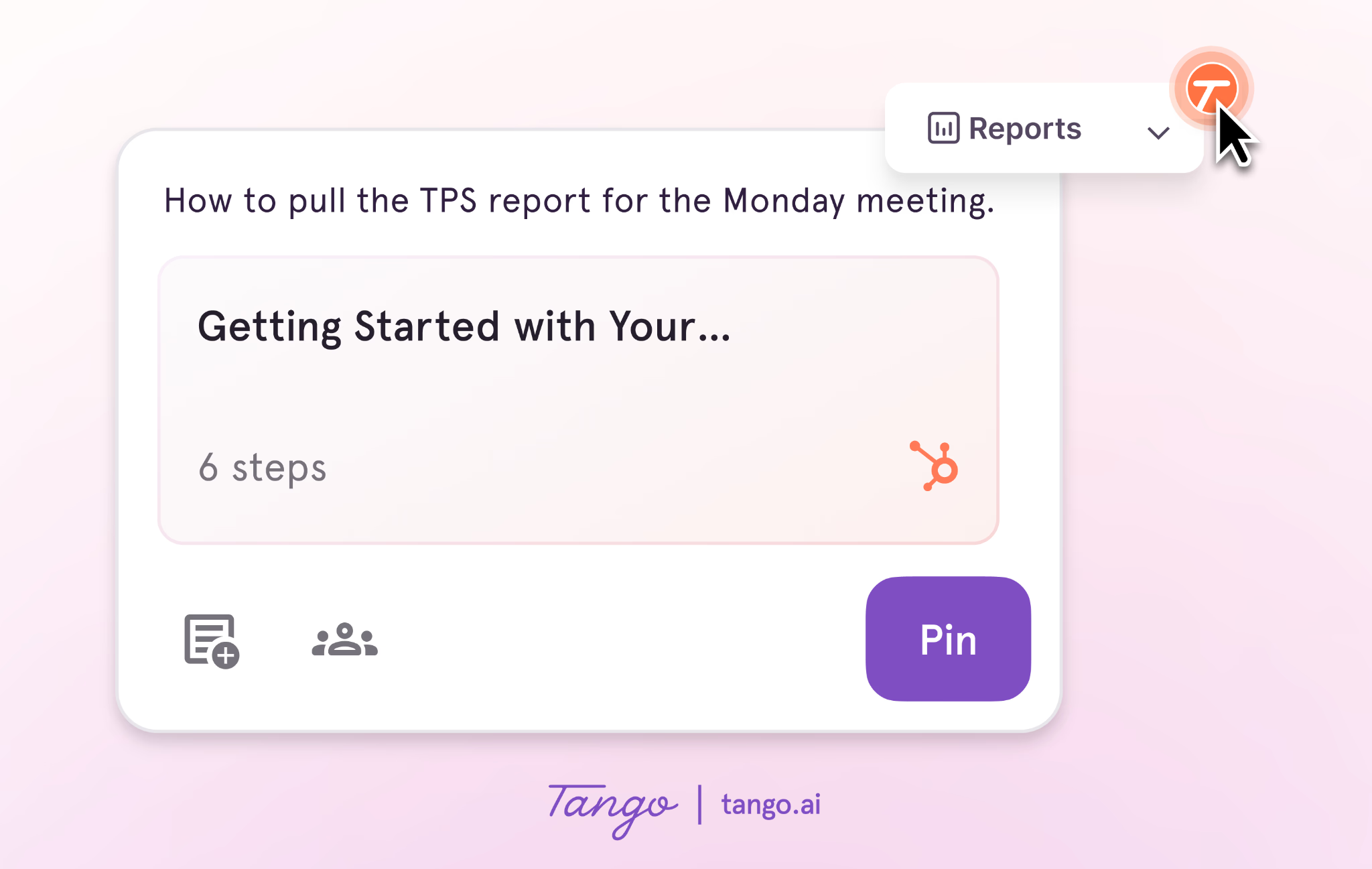
With Guide Me from Tango, documentation becomes instantly followable—right inside the tools where work happens.
- Give your team step-by-step guidance inside of any tool without switching tabs.
- Guide Me shows users exactly where to click so they can easily follow processes across applications.
- Surface guides, tips, or links as Pins at any point in a process where employees may need help.
Best for:
Operations, IT, and enablement teams that need to document workflows and help new hires learn tools quickly.
2. Rippling
Best for HR and IT onboarding automation
G2 Rating: 4.8/5 (13,061 reviews)
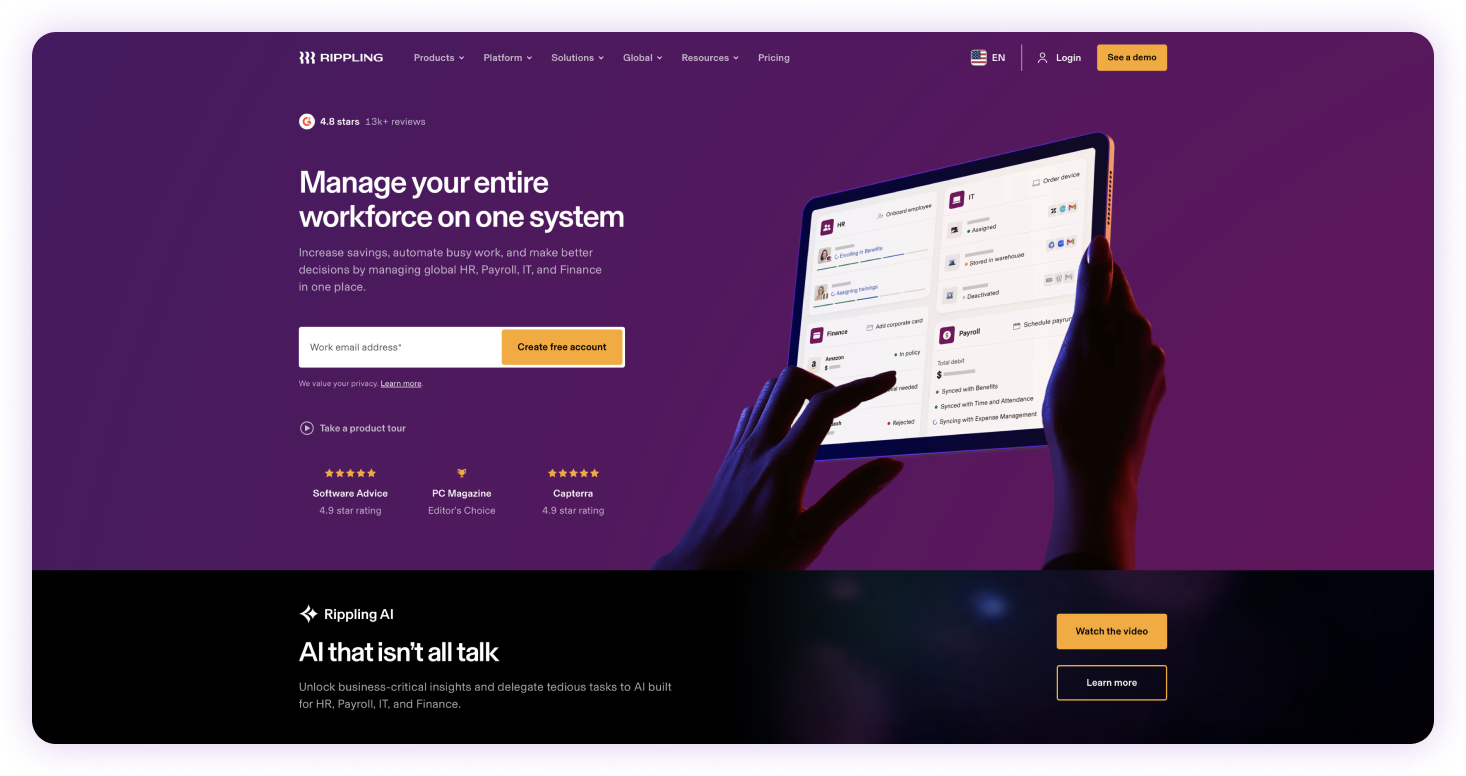
Rippling handles everything that needs to happen behind the scenes when someone joins your company. From payroll to device setup, it automates onboarding across HR and IT in one system.
Key features:
- One-click onboarding across payroll, IT, and benefits
- Automated device provisioning and app access
- No-code workflow automation
- Role-based permissions
- Global payroll support
Best for:
Companies that want to manage HR, IT, and payroll in a single platform.
3. BambooHR
Best for streamlined HR onboarding workflows
G2 Rating: 4.4/5 (5,711 reviews)
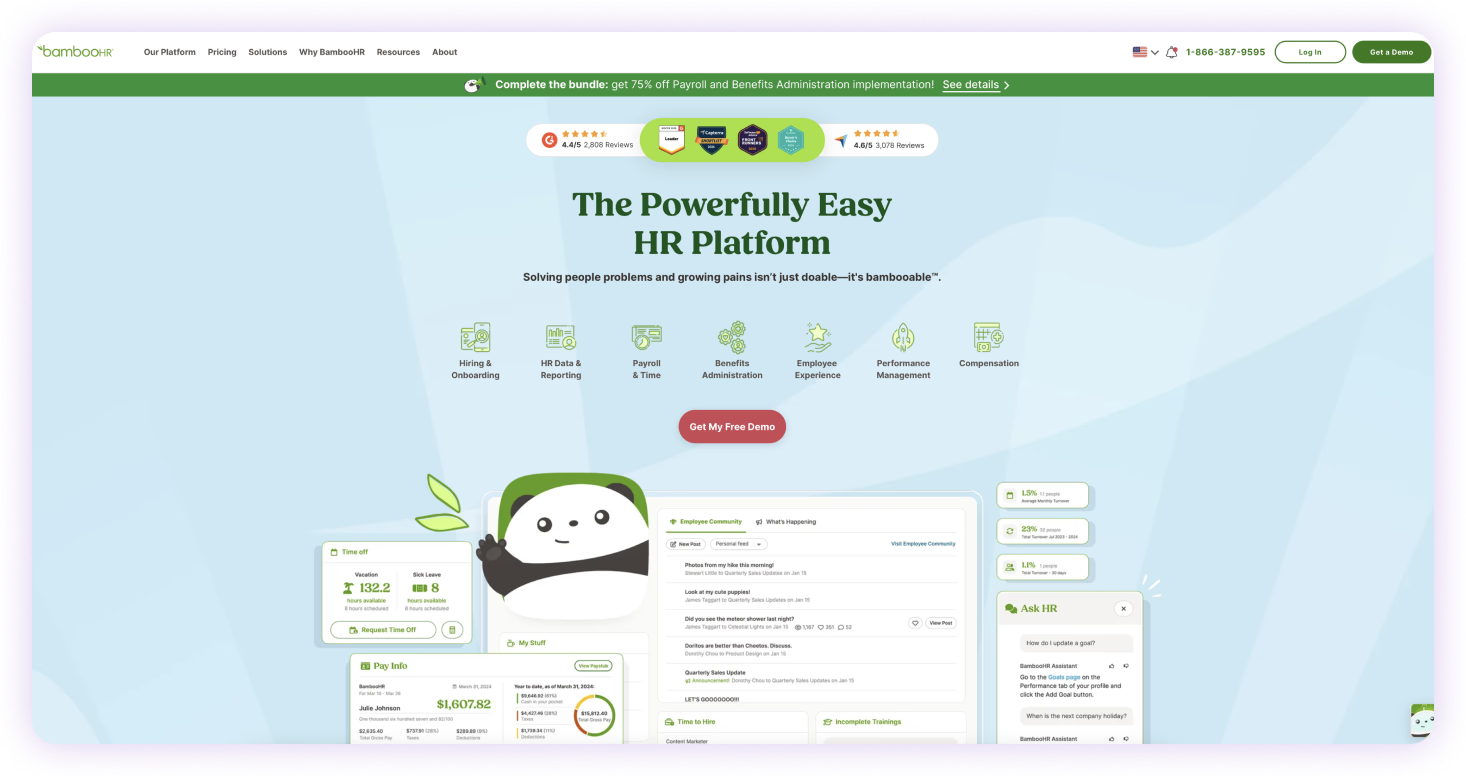
BambooHR is a go-to onboarding platform for small to mid-sized companies. It simplifies onboarding workflows and ensures every new hire gets a consistent experience.
Key features:
- Pre-boarding packets and e-signatures
- Custom onboarding checklists
- Automated compliance workflows
- Personalized welcome emails
- HR integrations
Best for:
HR teams that want a simple, reliable onboarding system without heavy setup.
4. Workday HCM
Best for enterprise HR onboarding
G2 Rating: 4.1/5 (1,692 reviews)
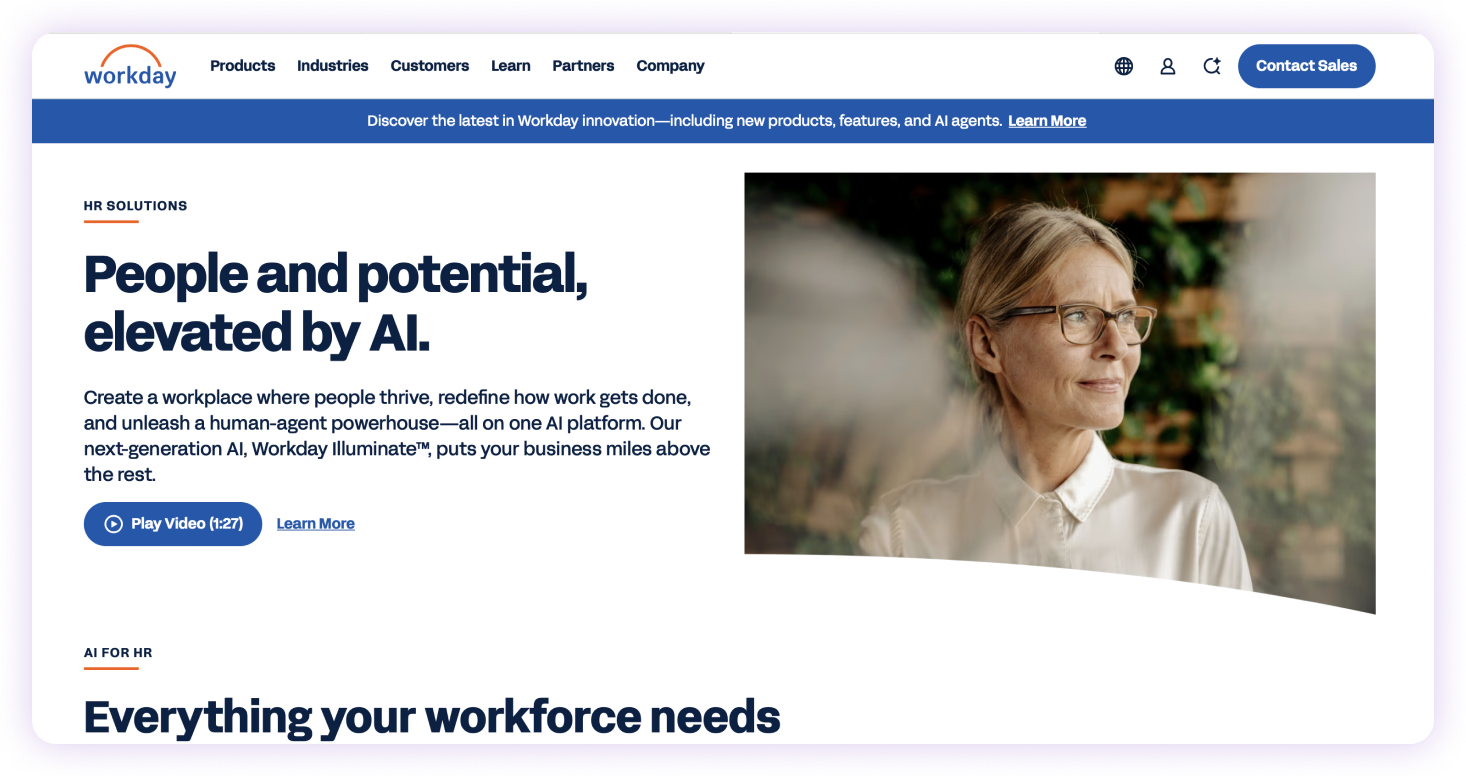
Workday is built for scale. It connects onboarding with broader workforce management, making it ideal for large, complex organizations.
Key features:
- Role-based onboarding workflows
- Personalized onboarding experiences
- AI-driven recommendations
- Advanced analytics and reporting
- Integration across HR systems
Best for:
Enterprises with global teams and complex compliance needs.
5. Intelogos
Best for onboarding analytics and employee productivity
G2 Rating: 5/5 (102 reviews)
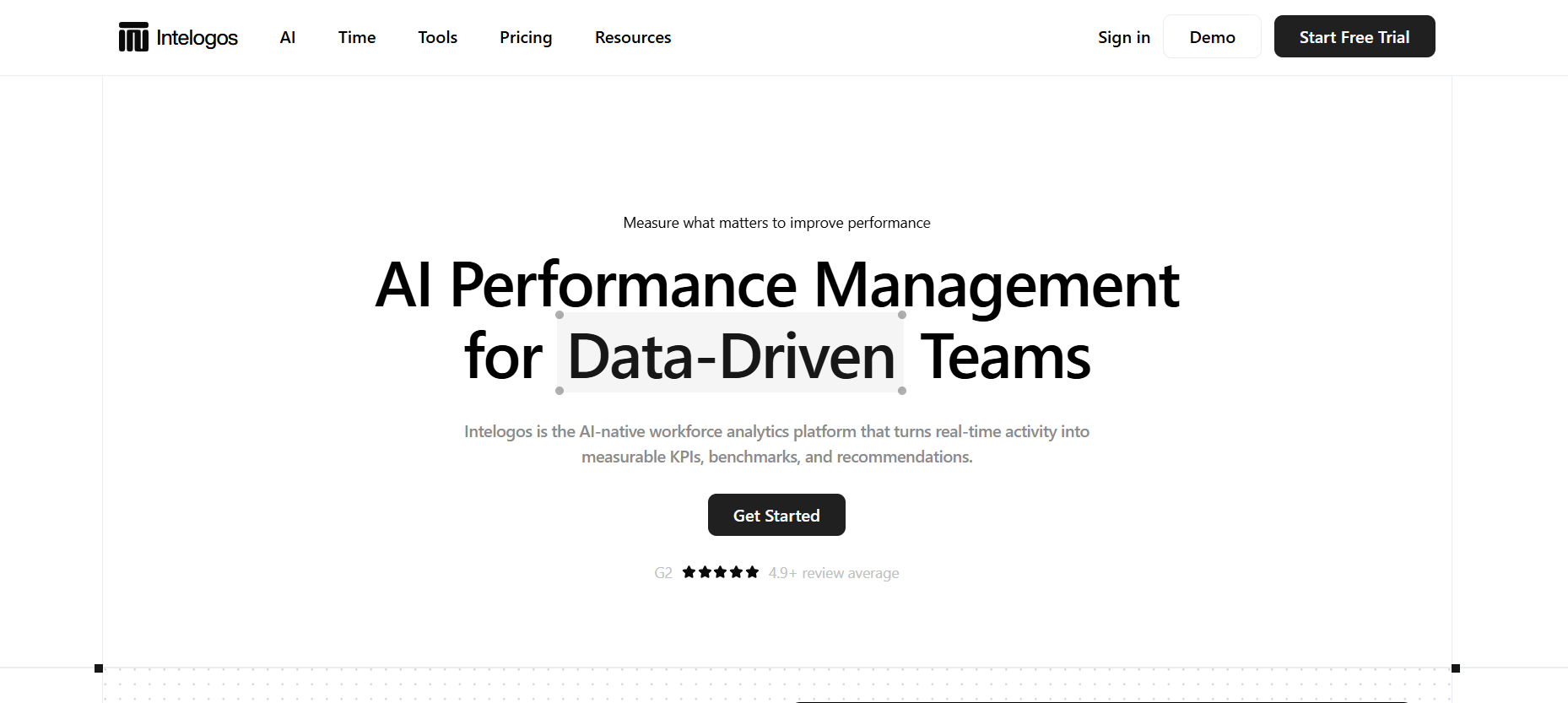
Intelogos helps organizations measure how new hires are adapting after onboarding. It provides workforce analytics and productivity insights that help managers understand onboarding effectiveness and identify opportunities to improve employee performance.
Key features:
- Workforce productivity analytics
- Employee engagement insights
- AI-powered performance reporting
- Manager dashboards
- Productivity trend tracking
Best for:
Organizations that want visibility into onboarding effectiveness and new hire productivity.
6. Greenhouse
Best for recruiting to onboarding handoff
G2 Rating: 4.4/5 (3,925 reviews)
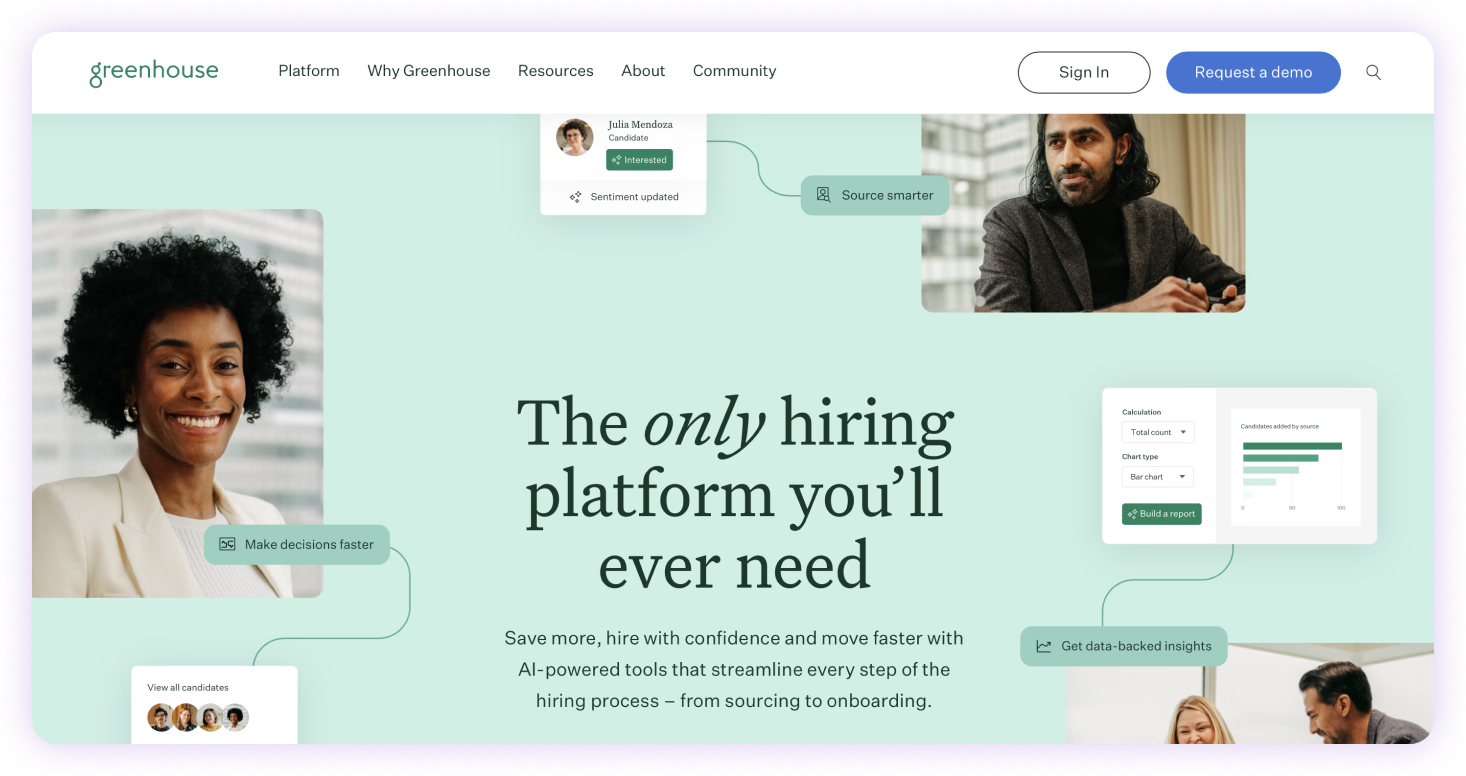
Greenhouse bridges the gap between hiring and onboarding. It ensures new hires transition smoothly from candidate to employee without losing context.
Key features:
- Automated onboarding plans
- Seamless data transfer from recruiting
- Task assignments and workflows
- New hire surveys and tracking
- Extensive integrations
Best for:
Companies that want a structured, consistent transition from recruiting into onboarding.
7. Trainual
Best for role-based training and compliance tracking
G2 Rating: 4.7/5 (1,041 reviews)
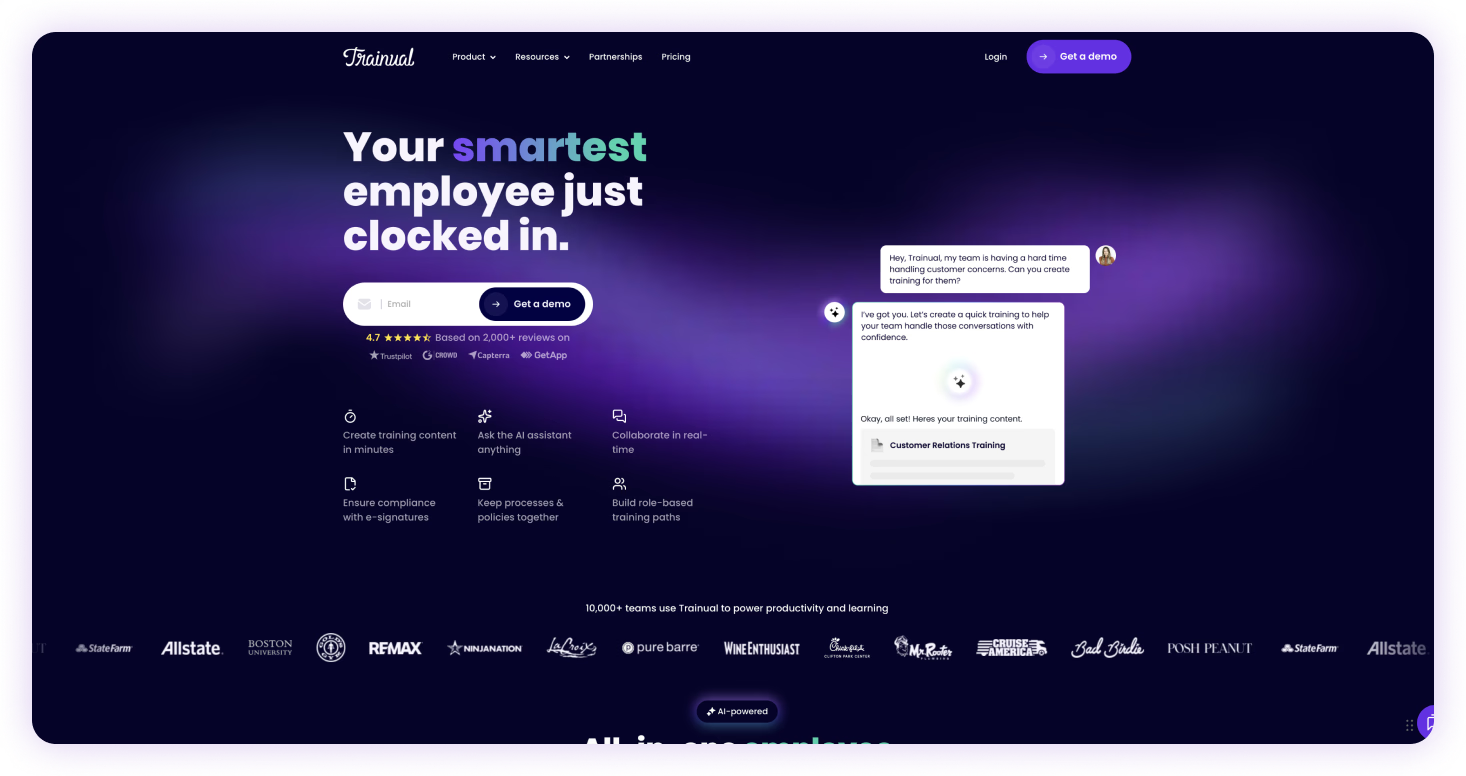
Trainual helps teams turn processes into structured training programs. It’s designed for consistency—so every new hire learns the same way.
Key features:
- Role-based training paths
- AI-assisted course building
- Built-in quizzes and tracking
- Org chart and role mapping
- Integrations with HR tools
Best for:
Growing companies that want standardized onboarding training.
8. Waybook
Best for SOPs, onboarding and training in one playbook
Capterra Rating: 4.9/5 (56 reviews)
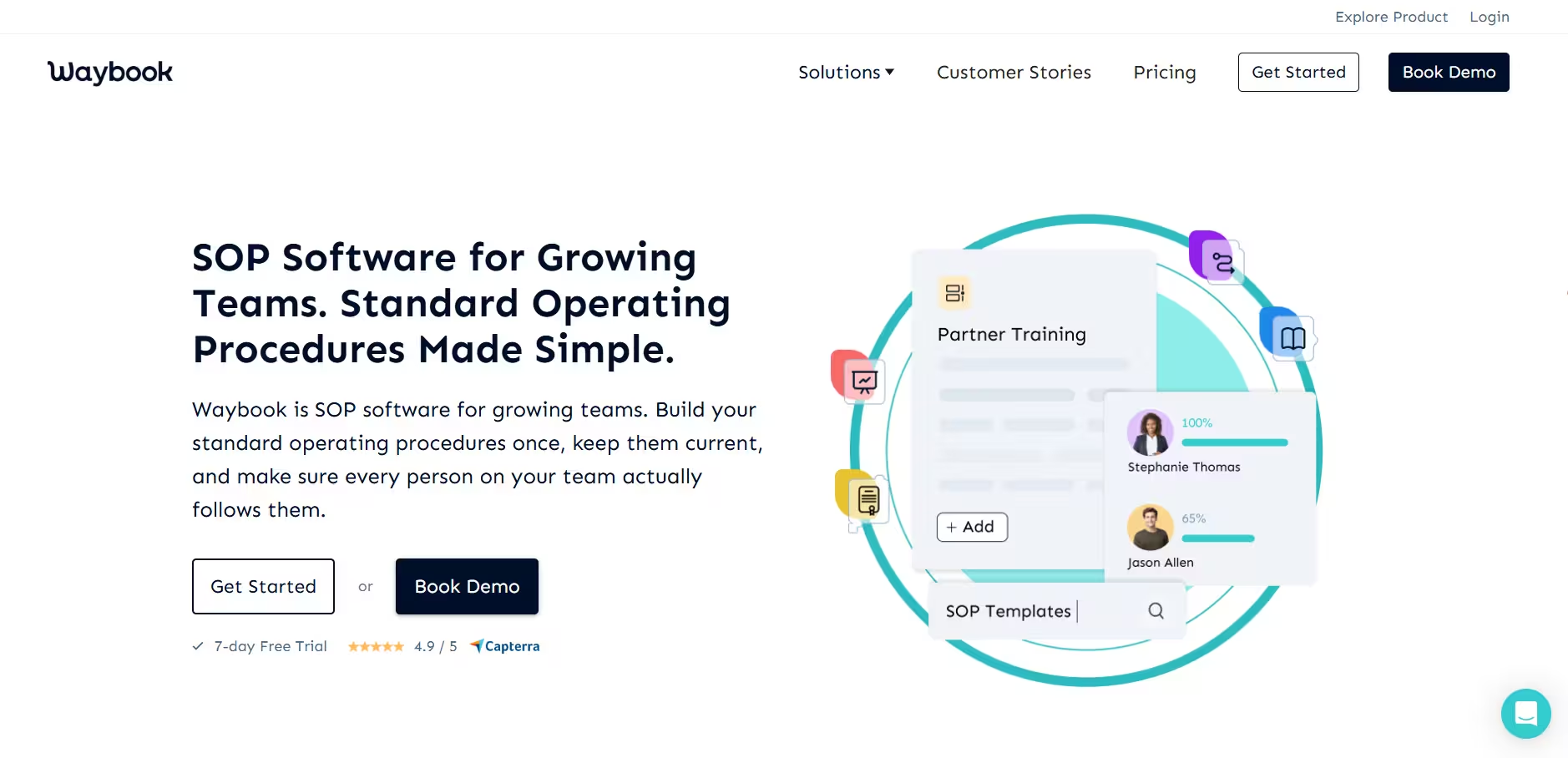
Waybook turns your processes into a structured operating playbook, organized by team, department and role, and tracks whether new hires have read and understood it. Processes are drafted with AI or captured as step-by-step visual guides with Waybook Shots, and every document has an owner and a revision history.
Key features:
- AI Content Writer drafts SOPs from rough notes
- Waybook Shots captures step-by-step visual guides
- Onboarding flows with read confirmations, tests and progress tracking
- Playbook organized by team, department and role, with owners and revision history
- Integrations with BambooHR, Breathe HR, Slack and Microsoft Teams, plus a mobile app
Best for:
Growing service businesses that want every new hire trained on the same SOPs, in one system.
9. Guru
Best for centralizing company knowledge during onboarding
G2 Rating: 4.7/5 (2,320 reviews)

Guru is an AI-powered knowledge base that gives new hires a single place to search for company information, policies, and answers.
Key features:
- AI-powered search
- Knowledge cards and collections
- Content verification workflows
- Slack and Chrome integrations
- Integrations across work tools
Best for:
Teams that want to reduce repetitive questions and enable self-service learning.
10. Docebo
Best LMS for onboarding training programs
G2 Rating: 4.3/5 (742 reviews)

Docebo is a full-scale learning management system for structured onboarding programs. It’s built for companies with dedicated L&D teams.
Key features:
- Automated course enrollment
- Personalized learning paths
- Gamification features
- Large content library
- Global learning support
Best for:
Enterprises running formal, large-scale onboarding programs.
11. Asana
Best for coordinating onboarding tasks
G2 Rating: 4.4/5 (13,722 reviews)
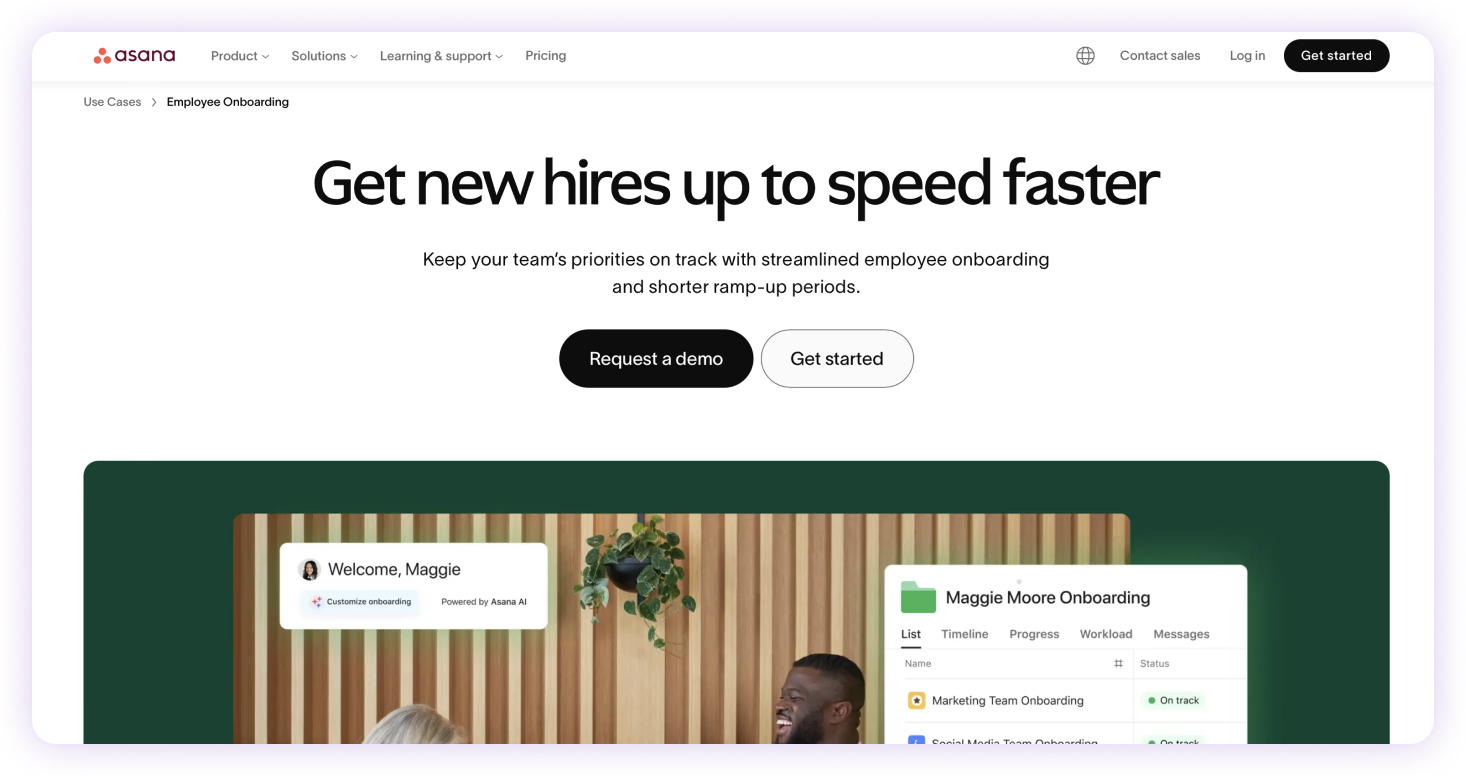
Asana helps teams keep onboarding organized across departments. It ensures tasks are assigned, tracked, and completed on time.
Key features:
- Onboarding templates
- Task automation and reminders
- Multiple project views
- Goal tracking
- Extensive integrations
Best for:
Teams managing onboarding across HR, IT, and managers.
How to choose the right onboarding software
A strong onboarding stack typically includes:
- HR tools to handle setup and compliance
- Training tools to deliver structured learning
- Task management tools to coordinate onboarding
- Workflow documentation tools to help employees actually do the work
The bottom line
That last piece is where most teams struggle. Because no matter how good your onboarding plan is, it will always break down if new hires don’t know how to use your tools or follow your processes.
That’s where Tango bridges the gap between onboarding and execution. Instead of repeating the same walkthroughs, you can:
- Capture a process once
- Turn it into a step-by-step guide
- Let new hires learn by doing
FAQs
What is the best employee onboarding software?
The best employee onboarding software depends on your onboarding goals. HR platforms like Rippling and BambooHR help automate employee setup, training platforms like Trainual and Docebo deliver structured learning, and workflow documentation tools like Tango help new hires learn real processes as they work.
Do I need more than one employee onboarding tool?
Yes. Most organizations use multiple onboarding tools because no single platform handles every part of the employee onboarding process. An HR platform handles employee setup, training software delivers learning, and workflow documentation tools help employees apply what they've learned in their day-to-day work.
How can I improve my employee onboarding process?
The most effective onboarding programs combine HR administration, structured training, clear process documentation, and ongoing guidance. Giving new hires the right information at the right time helps them become productive faster while reducing repetitive questions and inconsistent work.
How long should employee onboarding last?
While administrative onboarding is often completed within the first few days, effective employee onboarding typically lasts several weeks or months. Continued training, process guidance, and manager support help new hires build confidence and reach full productivity.
Which onboarding software is best for remote employees?
Remote teams benefit from onboarding software that supports every stage of the employee journey. HR platforms streamline setup, training platforms deliver structured learning, and workflow documentation tools provide step-by-step guidance that employees can access independently from anywhere.
How can I help new hires learn internal processes faster?
The fastest way to help new hires learn internal processes is to provide guidance where the work happens. Instead of relying only on training sessions or static documentation, tools like Tango turn real workflows into step-by-step guidance that employees can follow while they work.



Next time someone asks, “how do I…?” Send a Tango.
Start capturing your first workflow today.