How many times should you answer the same question before documenting it?

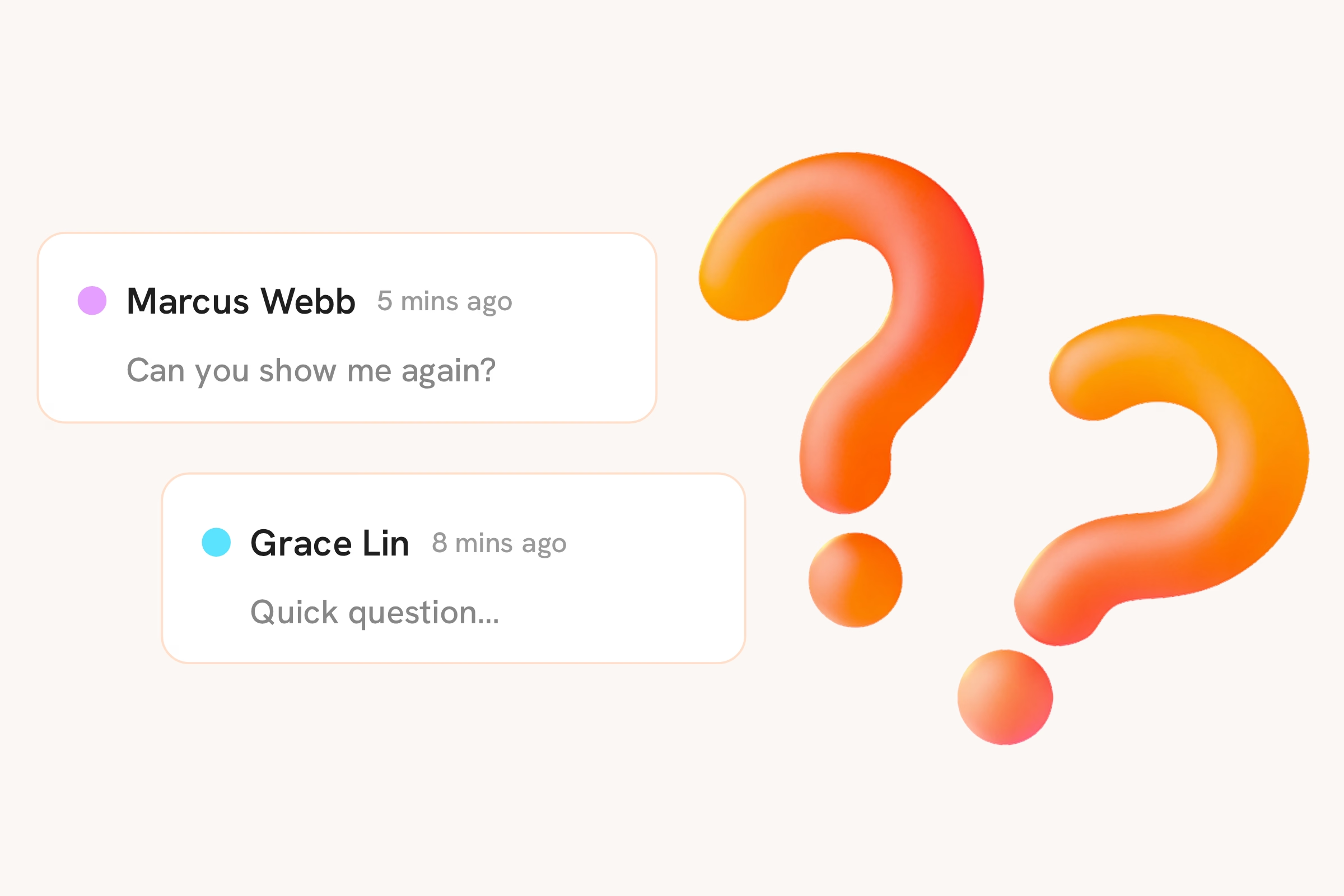
“Hey, quick question…”
Maybe it actually is quick. Or maybe you’re about to spend 20 minutes screen sharing a process you’ve already shown three people this month.
Again.
There are certain questions that stop being questions after you’ve answered them enough times. They become processes you keep having to explain.
So how many times should you answer the same question before you document it?
We made a completely unbiased decision tree to help.
Spoiler: It’s probably fewer times than you think.
Should this “quick question” become documentation?
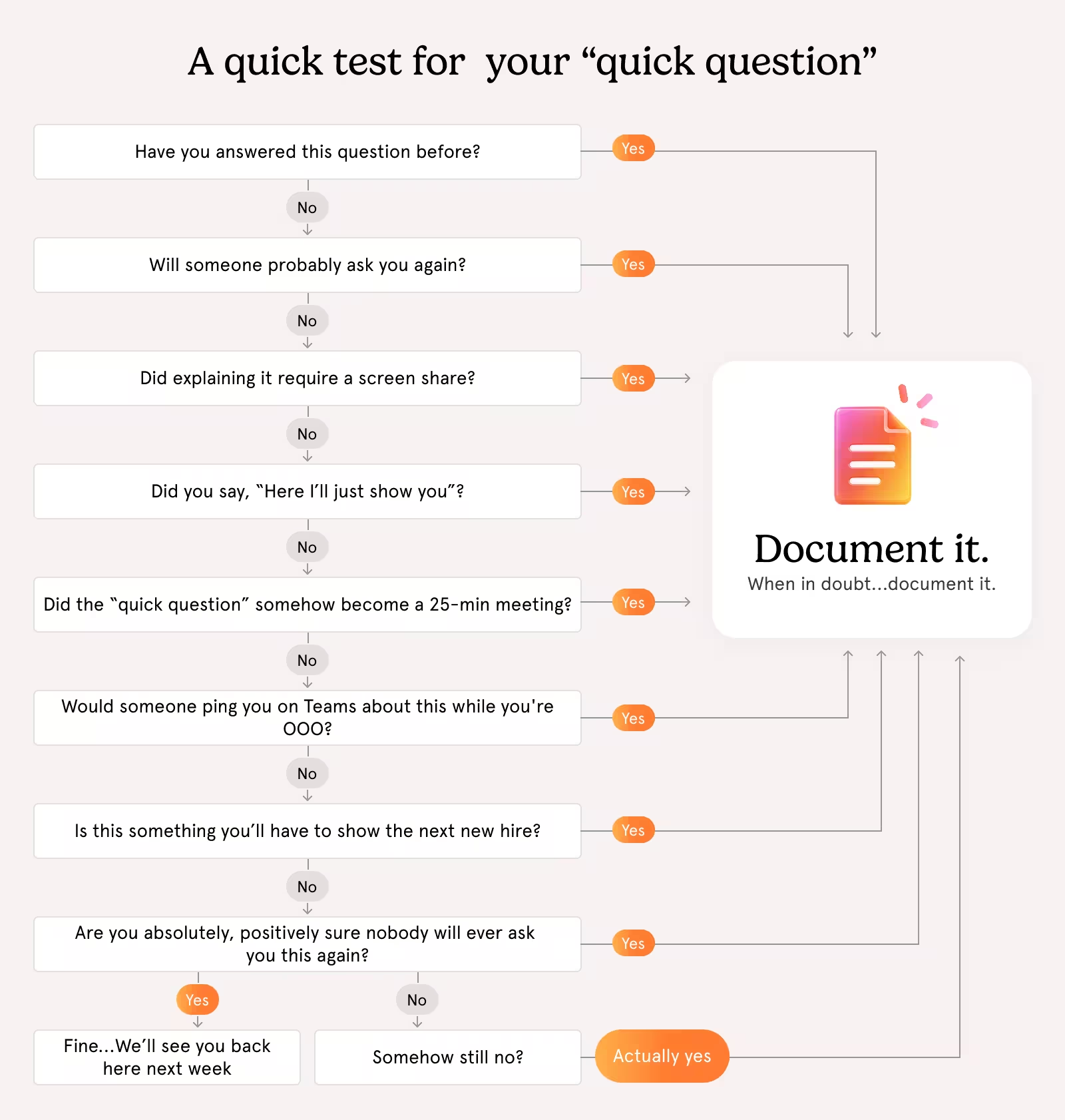
Somehow, all roads lead to “document it.” Weird.
But there is a real rule hiding inside our extremely scientific decision tree:
Repeated + procedural + teachable + likely to come up again = document it once so you don’t have to keep explaining it.
If you keep answering the same question, showing the same clicks, or walking different people through the same process, the answer needs to exist somewhere other than in your head.
Why the “quick” questions add up
One quick question isn’t a big deal. But enough of them, and they’ve quietly become part of your job.
Death by questions is rarely one difficult question. It’s 37 extremely easy ones.
You knew the answer, so people asked you. Then they asked you again. Then someone new started and asked you too.
Somewhere along the way, knowing how the work gets done turned into being responsible for explaining how the work gets done.
Okay, fine. “Document it.”
So yes. All those repeatable processes? Document them.
There’s just one small problem: now documentation is your job too.
The next “quick question” comes in, and you stop what you’re doing to answer it. You realize you’ve answered it before, so “document this” gets added to your to-do list.
Eventually, you open a blank doc and do the process again so you can take screenshots. You crop them, write out the steps, fix the formatting, and put it somewhere people can find it.
And while you’re doing all of that, someone pings you on Teams with another “quick question.”
Congratulations. Your solution to having too much work is more work.
Give yourself some backup
You’re already going to show them how, so show them. Just capture it while you do.
With Tango, walk through the process like you normally would. Tango captures the steps, screenshots, and your voice (if you prefer) as you go and turns them into a guide you can share.
Do the process → Tango captures it → Share the guide
Now the explanation doesn’t disappear when the screen share ends.
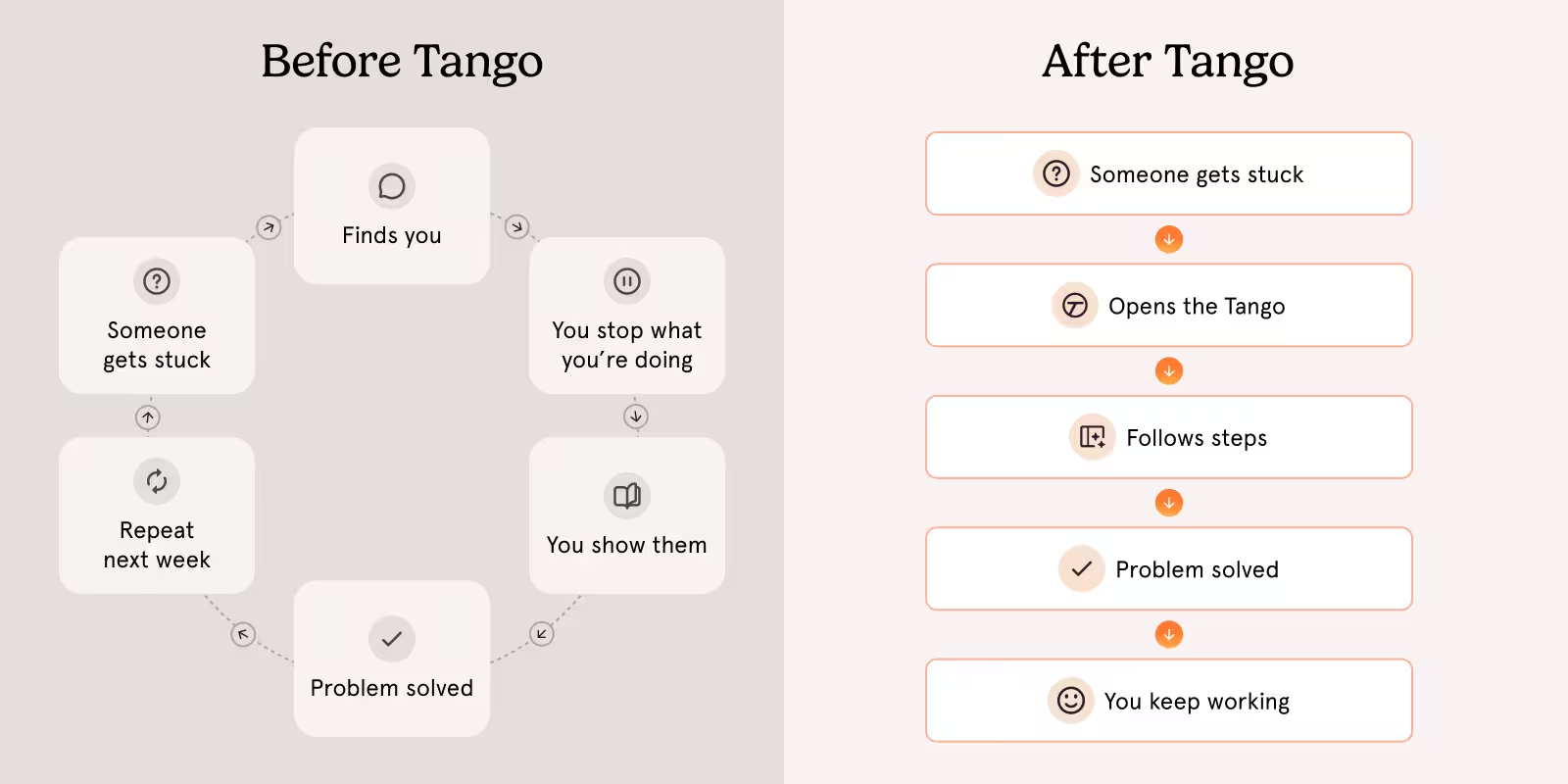
And not every question needs a giant SOP. Sometimes people just need to know where to click or what to do next.
Capture the process once and you’re covered. The next person has something they can actually follow when they get stuck.
No jumping on another screen share. No waiting for you to be free.
You’re still the person who knows how it works. You just don’t have to be there every single time someone needs what you know.
The repeat-question rule
So how many times should you answer the same question before documenting it?
There’s no magic number. But twice is a pretty good clue. If you’ve explained it more than once and you know someone will need the answer again, it’s worth capturing.
A few other clues:
- You keep showing people the same clicks.
- It comes up every time someone new joins.
- The answer is a process someone else could follow.
- You’ve caught yourself saying, “I know I showed you this before.”
- Someone would need to ask you if you weren’t there.
If you’ve explained it twice, capture it once.
The goal isn’t to document every question. It’s to give people something they can use the next time they’re stuck.
Will someone ask again? Probably.
Do you have to explain it again? Not anymore.
Send a Tango instead.




Next time someone asks, “how do I…?” Send a Tango.
Start capturing your first workflow today.