How to share best practices in an organization

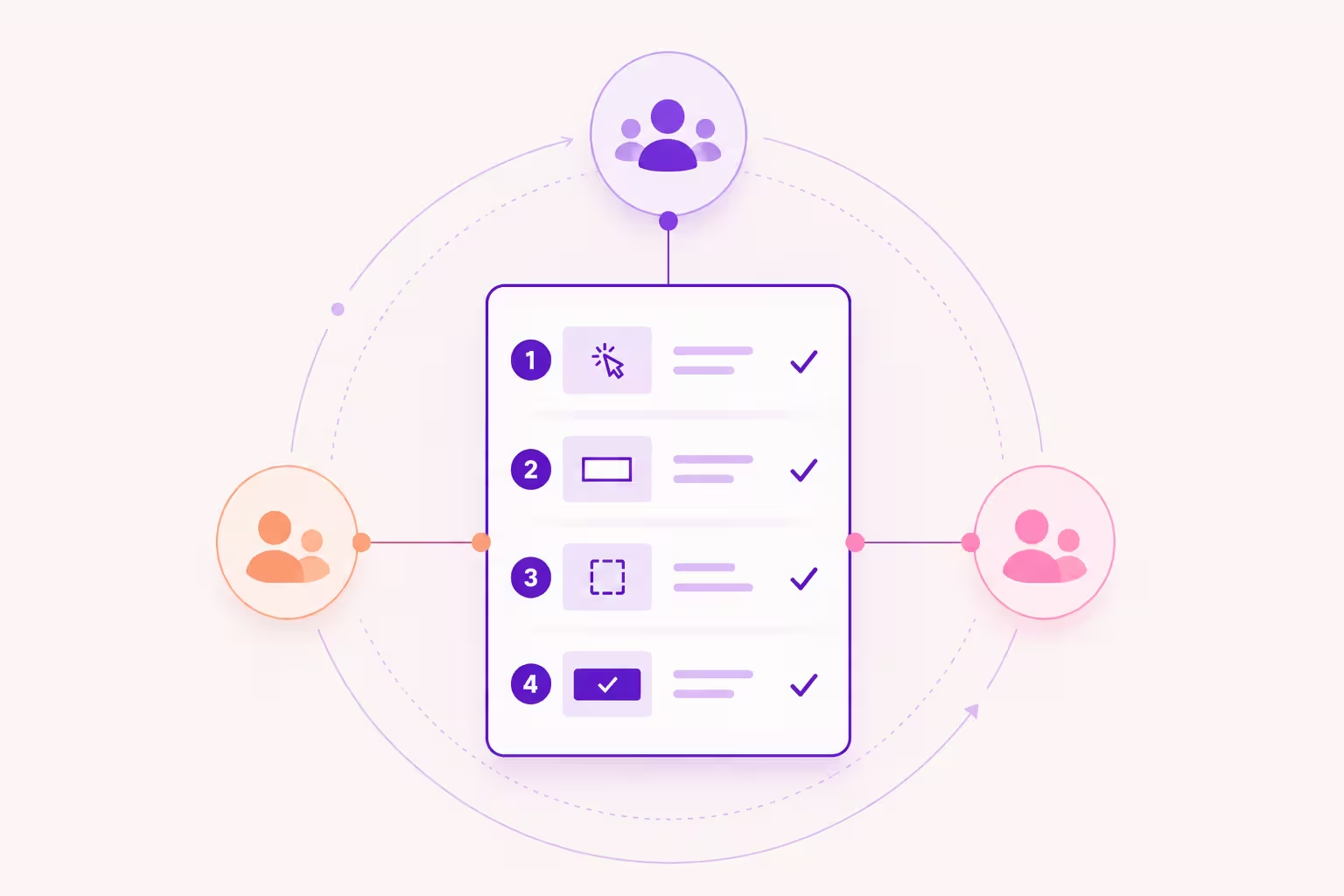
Every team has people others rely on to know how things get done. They answer the same questions, walk coworkers through the same processes, and become the unofficial experts on the tools their team uses.
Sharing best practices turns that knowledge into repeatable guidance other employees can use without always relying on the person who knows the process best. The key is to document what works, make it easy to access, and help employees apply it while they're doing the work.
To share best practices across an organization:
- Identify the knowledge worth sharing.
- Document the best practice.
- Share it where people can find it.
- Apply it in the flow of work.
- Improve it as processes change.
What does sharing best practices mean?
Sharing best practices means taking a method, process, or workflow that has proven effective and making it available so others can repeat or adapt it.
A best practice should be more than one person's preferred way of working. It should produce a successful outcome and be useful enough for other employees or teams to follow.
Why sharing best practices matters
When important process knowledge lives with a few experienced employees, it can be difficult for the rest of the team to work consistently without their help. Processes may vary from person to person, new employees take longer to get up to speed, and valuable knowledge can disappear when someone changes roles or leaves.
That knowledge gap also costs employees time. In a survey of 982 knowledge workers, APQC found that knowledge workers estimated spending 2.8 hours each week looking for or requesting the information they need. APQC also identified recreating existing information and seeking out the right people for answers or expertise as common productivity drains.
Sharing best practices makes that knowledge reusable, helping teams work more consistently, avoid solving the same problems repeatedly, and preserve what experienced employees know.
How to share best practices in an organization
1. Identify the knowledge worth sharing
Start with the processes and workflows employees already turn to one another for help with. If the same person keeps answering questions about how to complete a task, walking coworkers through a process, or showing new team members how a tool works, start there.
Focus on practices that solve a recurring problem and have produced a successful outcome. Before documenting something as a best practice, make sure it can reasonably be repeated or adapted by someone else.
2. Document the best practice
Once you've identified a best practice, document how the work actually gets done. Ask the person who knows the process best to walk through it as they normally would, including the steps and context someone unfamiliar with the process might miss.
For repeatable workflows, use clear step-by-step instructions and visuals so someone else can follow the process without needing help. Capture the process as it's actually performed rather than relying on someone to reconstruct it from memory later.
Before sharing the best practice more broadly, have someone unfamiliar with the process follow the documentation. If they can complete the task without asking the person who created it for help, that's a good sign the knowledge is ready to share.
3. Share it where people can find it
Once a best practice is documented, make sure the people who need it can easily access it. That might mean adding it to a knowledge base, linking to it in Slack or Teams, including it in onboarding materials, or making it available alongside the tools and processes it supports.
Think about where employees are most likely to need the guidance, not just where it's easiest to store it. The closer the best practice is to the work itself, the less time employees have to spend searching for answers or asking someone for help.
4. Help employees apply it in the flow of work
Finding a best practice is only part of the challenge. Employees still need to apply it correctly when they're completing the task.
For software and process workflows, make guidance available while the work is happening. Instead of asking employees to memorize a process or switch back and forth between instructions and their work, give them a way to follow the steps as they complete the task.
This is especially useful for unfamiliar or infrequent processes, where employees may understand what they need to do but still need help completing each step correctly.
5. Improve it as processes change
A best practice can stop being useful when the process, software, or circumstances behind it change. Treat shared guidance as something that should evolve with the work rather than something you document once and forget.
Give employees a way to flag instructions that are unclear or out of date, and make sure someone is responsible for updating important guidance when the underlying process changes. Periodically review the practices your team relies on most so employees can trust that what they're following still reflects how the work actually gets done.
How Tango helps teams share best practices
Tango helps teams share best practices by capturing how work actually gets done and turning it into step-by-step guidance others can follow. It turns “this is how I do it” into “this is how we do it.”
Instead of stopping to document a process manually, perform the workflow as you normally would. Tango captures it and creates a step-by-step guide with screenshots, highlights, and descriptions.
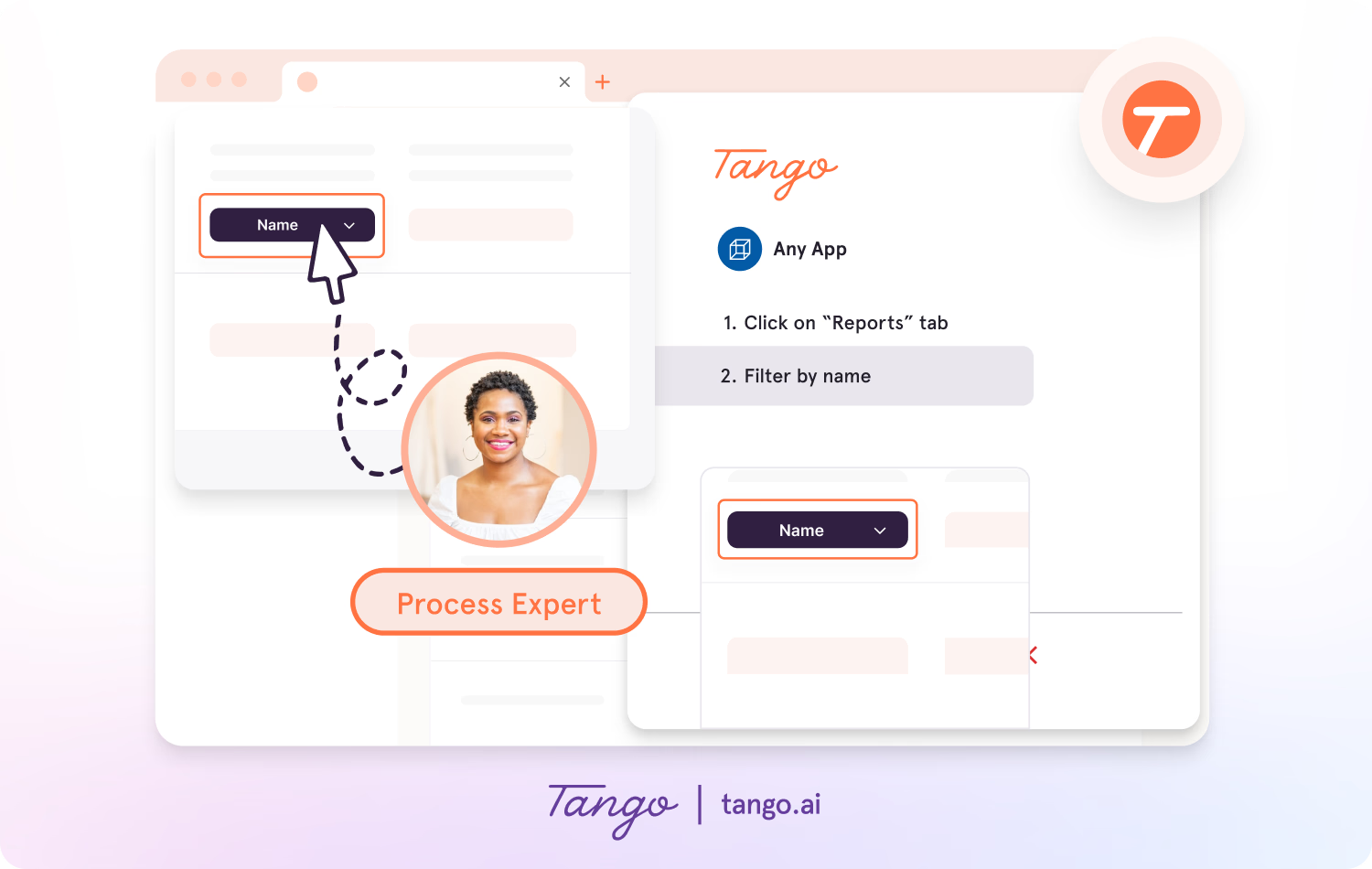
"Before Tango, how-to guides took me—and only me—20+ hours each. With Tango, it's so easy that 30 of my teammates are voluntarily creating their own documentation.” — Emily Rodgers, Senior Product Development Manager, Clincierge
From there, teams can make that knowledge available in the way employees need it:
- Share the guide anywhere. Send it as a link, export it as a PDF, or embed it in the resources your team already uses.
- Put answers where questions happen. Pins surface relevant guides, tips, and links inside the tools employees use.
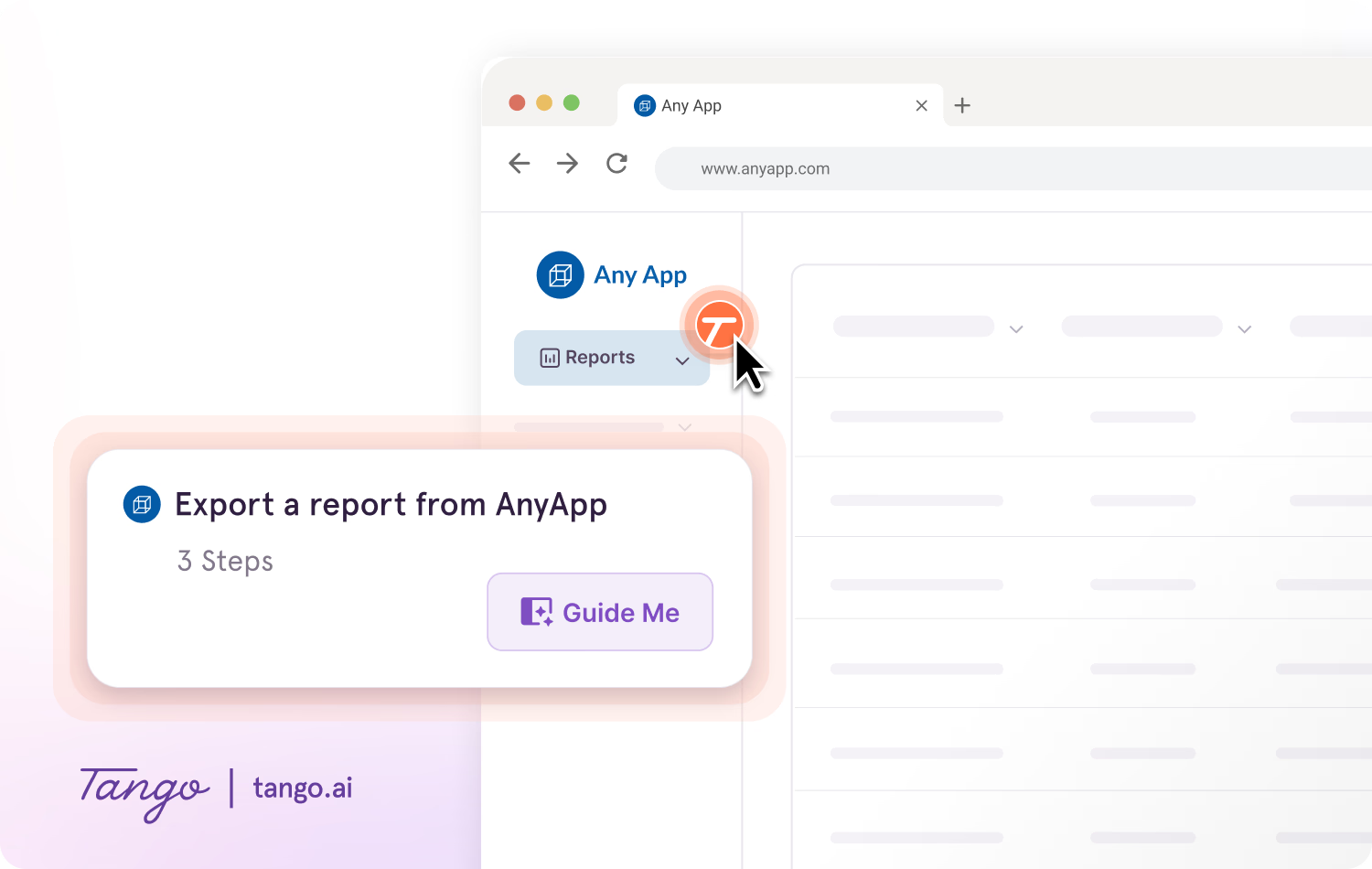
- Guide people while they work. Guide Me walks employees through the process on their own screen, one step at a time.
Make best practices easier to repeat
Sharing best practices shouldn't mean relying on the same experienced employees to explain a process every time someone needs help. When that knowledge is documented, easy to find, and available while the work is happening, more people can put it into practice.
The goal isn't just to share what works. It's to make what works repeatable.
Frequently asked questions
What is an example of a best practice in the workplace?
A best practice in the workplace is a proven way of completing a task that other employees can repeat or adapt. For example, an experienced employee might develop an effective process for onboarding a new hire, handling a customer request, or entering information correctly in a business system. Once that process consistently produces the desired outcome, it can be documented and shared with others.
What's the difference between a best practice and an SOP?
A best practice is a proven approach that works well, while an SOP is a documented procedure for completing a specific process consistently. Best practices can often be adapted to different situations, while SOPs provide standardized steps for completing work. A best practice can become the basis for an SOP when an organization decides to formalize that approach.




Next time someone asks, “how do I…?” Send a Tango.
Start capturing your first workflow today.